Disability Disclosure in Schools Explained for Families
- May 25
- 9 min read

Many parents and students assume that disclosing a disability at school could invite lower expectations or unwanted labels. The opposite is true. Disability disclosure in schools explained clearly shows that timely, informed disclosure is what unlocks legal protections, formal accommodations, and the kind of individualized support that can genuinely change a student’s educational experience. Whether you are a parent preparing for an IEP meeting, a student wondering what to share and when, or an educator trying to support your students better, this guide walks you through the legal foundations, practical strategies, and real-world implications of disability disclosure in school settings.
Table of Contents
Key Takeaways
Point | Details |
Disclosure activates legal protections | Sharing a disability with school staff triggers rights under IDEA, Section 504, and the ADA. |
Documentation drives accommodations | IEPs and 504 plans connect disability effects to specific, measurable supports and goals. |
Timing and privacy matter | Families control when and to whom they disclose, but earlier disclosure generally means faster support. |
Discipline rules change with disclosure | A disclosed disability can require a manifestation determination before serious disciplinary action. |
Emotional barriers are real and manageable | Schools that build welcoming disclosure processes see higher rates of student trust and participation. |
Disability disclosure in schools explained: the legal foundation
Understanding why disclosure matters starts with understanding the laws behind it. Three federal laws govern disability rights in school settings, and each one plays a different role.
The Individuals with Disabilities Education Act (IDEA) applies to students who need specialized instruction because of a disability. It requires schools to evaluate students, develop Individualized Education Programs, and provide a free appropriate public education. IDEA covers students from birth through age 21 and is the primary law governing special education services.
Section 504 of the Rehabilitation Act applies more broadly. A student does not need to require specialized instruction to qualify. If a disability substantially limits a major life activity, including learning, reading, concentrating, or communicating, the student is entitled to reasonable accommodations. Section 504 plans are the formal documents that outline those supports.
The Americans with Disabilities Act (ADA) extends protections into public school settings and reinforces the right to equal access. While IDEA and Section 504 are more directly relevant to K-12 accommodation processes, the ADA matters especially as students transition into higher education.
Here is what the disclosure process looks like in practice:
A parent or student informs the school of a known or suspected disability
The school is obligated to evaluate the student if there is reason to suspect a disability affects their education
Parents can request and review evaluation reports and education records within specific timelines to participate meaningfully in planning
The school and family collaborate to develop an IEP or 504 plan based on evaluation findings
Accommodations and services are documented and implemented
One distinction that families often miss is the difference between disclosing for accommodations versus disclosing for disciplinary protections. Accommodation disclosure is proactive. Disciplinary protection is reactive, but it still depends on a documented disability. Both require disclosure to be effective, which is why waiting until a crisis is rarely the right call.
Barriers to disclosure and best practices for educators and families
Knowing your rights is one thing. Actually disclosing feels different. Many families and students hold back because of real fears: fear of being treated differently, fear that teachers will lower their expectations, or fear that a label will follow a child through their school years.
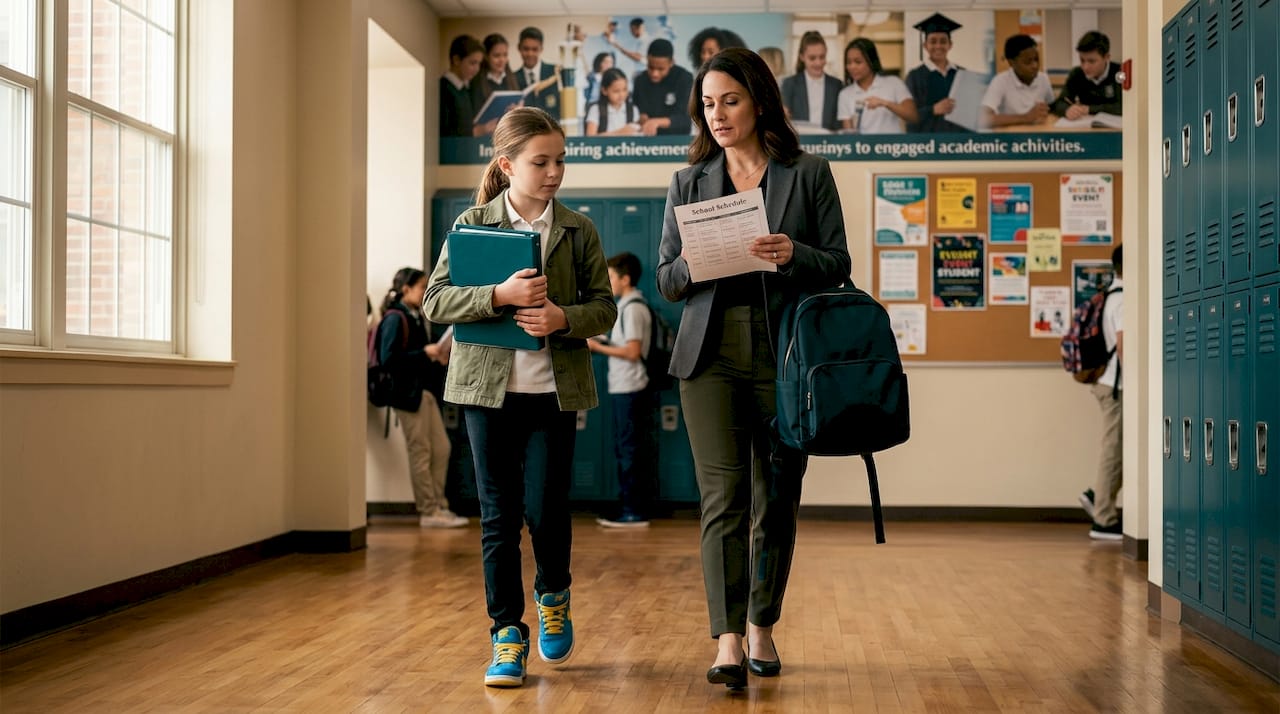
Institutional trust directly affects disclosure rates. When schools create welcoming, predictable processes for disclosure, students and families are more likely to come forward early. When the process feels punitive or bureaucratic, families delay, and students lose time they cannot get back.
For educators, disability disclosure best practices start with how you communicate. A few specific approaches make a meaningful difference:
Use neutral, factual language when discussing a student’s needs. Avoid speculation about diagnoses in conversations or written records.
Make it clear to families that disclosure is a tool for support, not a trigger for judgment.
Provide written information about the school’s accommodation process before families have to ask.
Train staff to respond consistently and confidentially when a student or parent discloses.
For families, the question of when and to whom to disclose deserves careful thought. You are not required to disclose to every teacher. Disclosure to a school psychologist, special education coordinator, or administrator is typically what activates the formal process. Sharing information with classroom teachers is a separate, often more personal decision.
Pro Tip: If your child is entering a new school or grade level, submit a written disclosure request at least 30 days before the school year starts. This gives the school time to review records, schedule meetings, and put accommodations in place before the first day.
Universal Design for Learning offers another angle worth knowing. When schools build accessible learning environments from the start, including flexible pacing, multiple ways to demonstrate knowledge, and built-in support structures, students face less pressure to formally disclose just to access basic supports. UDL does not replace formal accommodation plans, but it reduces the stakes around disclosure and makes classrooms more equitable for everyone.
Understanding autistic burnout in schools is one example of why early, informed disclosure matters so much for neurodivergent students. By the time burnout is visible, the student has often been struggling without support for months.
How disclosure shapes educational planning and accommodations
Disclosure is not just a conversation. It is the starting point for a documentation process that connects a student’s disability to specific, measurable educational supports.
The IEP is the most detailed version of this process. An IEP must document how a disability affects a student’s academic achievement and functional performance, then tie that information to measurable goals and specific services. This is not a formality. It is the legal mechanism that turns disclosure into real support.
Here is how the process typically unfolds after disclosure:
Referral for evaluation. A parent, teacher, or school staff member refers the student for a special education evaluation.
Evaluation. The school conducts assessments across all areas of suspected disability, typically within 60 days of receiving parental consent.
Eligibility determination. The IEP team reviews evaluation results and determines whether the student qualifies under IDEA or Section 504.
Plan development. For eligible students, the team develops an IEP or 504 plan that outlines accommodations, modifications, and services.
Implementation and review. Services begin, and the plan is reviewed at least annually, with a full reevaluation every three years.
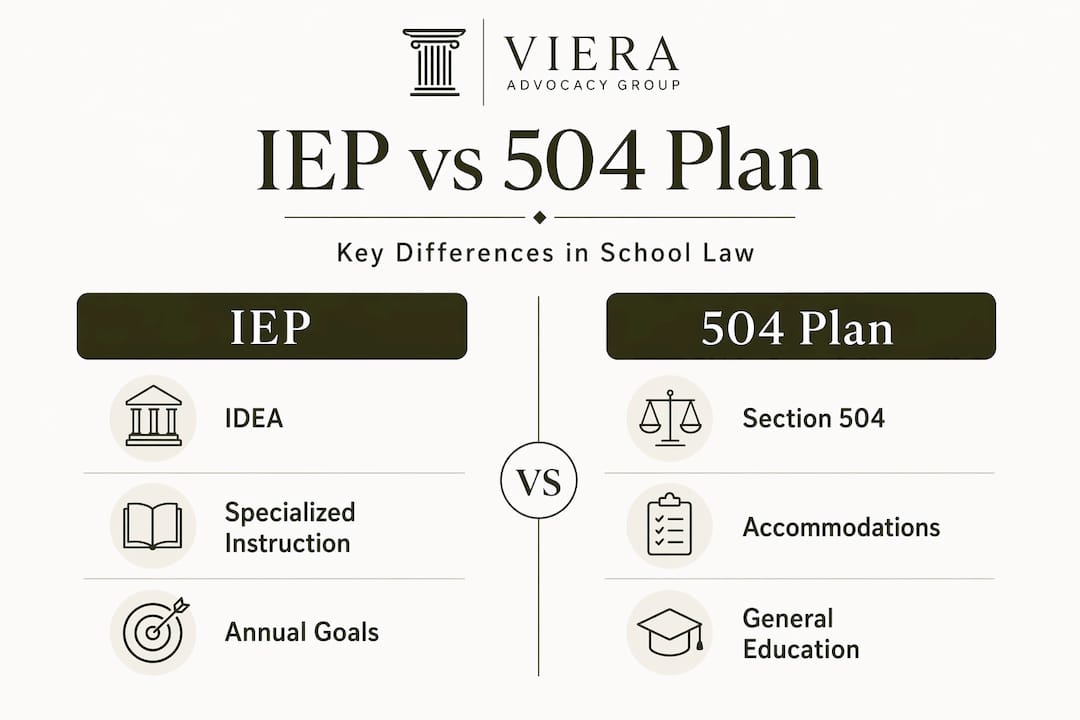
The difference between an IEP and a 504 plan matters here. An IEP provides specialized instruction and is governed by IDEA. A 504 plan provides accommodations without specialized instruction and is governed by Section 504. A student with ADHD who needs extended time on tests but does not require a modified curriculum, for example, might have a 504 plan rather than an IEP.
Feature | IEP | 504 Plan |
Governing law | IDEA | Section 504 / ADA |
Requires specialized instruction | Yes | No |
Includes measurable annual goals | Yes | Not required |
Formal review timeline | Annual | Periodic, less defined |
Who qualifies | Students needing special education | Students with disabilities affecting major life activities |
Pro Tip: Request a copy of all evaluation reports before any IEP or eligibility meeting. Reviewing them in advance gives you time to prepare questions and catch any errors in how your child’s needs are described.
One critical point about documentation: schools cannot include speculative diagnoses or unsupported medical labels in a student’s education record. Records should focus on observable behavior and documented needs. If you see language in a report that feels like an unofficial diagnosis without proper evaluation, you have the right to challenge it. Vieraadvocacygroup’s guidance on formal complaints can help you understand how to address documentation concerns in writing.
Disclosure, behavior, and disciplinary protections
One of the most urgent reasons to disclose a disability is the protection it provides when a student faces serious disciplinary action. This is an area where many families do not know their rights until it is too late.
When a student with a disclosed disability faces a suspension of more than 10 school days, or a change in placement for disciplinary reasons, federal law requires a specific review process. A manifestation determination review must be conducted within 10 school days. This review involves the parents and relevant members of the IEP team, and it asks one central question: was the behavior a direct result of the student’s disability?
If the answer is yes, the school cannot simply proceed with standard disciplinary consequences. The team must address the behavior through the student’s IEP and conduct a functional behavioral assessment if one is not already in place.
Here is what families should know about behavior documentation and disciplinary rights:
Schools can document behavioral incidents, but they cannot include unofficial diagnostic labels or speculative psychological interpretations in written records
If a student has not yet been evaluated for a disability but the school has reason to suspect one, certain protections still apply, including the right to an expedited evaluation
Families should request written documentation of any disciplinary incident that could affect placement
Timely disclosure before a disciplinary issue arises gives families far more leverage than disclosing after the fact
The table below summarizes how discipline works differently when a disability is disclosed:
Situation | Without Disability Disclosure | With Disability Disclosure |
Suspension over 10 days | Standard disciplinary process | Manifestation determination required |
Behavior pattern concerns | Handled through general school policy | Addressed through IEP behavior support plan |
Placement change | School decision | Requires IEP team meeting and parent consent |
Expedited evaluation right | Not triggered | Triggered when disability is suspected |
For families navigating these situations, supporting neurodivergent students without punishment-based discipline offers a practical framework for advocating during disciplinary steps.
My perspective on what disclosure actually takes
I have worked with enough families to know that the hardest part of disability disclosure is rarely the paperwork. It is the moment before the conversation, when a parent is sitting across from a school team and wondering whether sharing their child’s diagnosis will help or hurt.
What I have learned is that disclosure without preparation is rarely as effective as it should be. Families who come to meetings with documentation, specific examples of how the disability affects their child’s learning, and a clear sense of what supports they are asking for get better outcomes. Not because schools are adversarial, but because specificity makes it easier for educators to act.
I have also seen how much institutional culture shapes the experience. Some schools treat disclosure as a starting point for collaboration. Others treat it as a liability. Knowing which environment you are walking into changes how you prepare. If a school has a history of minimizing concerns, come with written requests and follow up in writing.
The families who do best are the ones who treat disclosure as an ongoing conversation, not a one-time event. Disabilities change. Students grow. What a child needed in third grade may look very different by seventh grade. Revisiting the plan regularly, and being willing to update the disclosure as needs evolve, is what keeps the support relevant. Understanding your disability rights is the foundation, but using them consistently is the practice.
— Chelsea
How Vieraadvocacygroup can support your next step
Knowing the rules is a starting point. Applying them in real school meetings, with real documentation, under real time pressure is where most families need support.

Vieraadvocacygroup provides families and educators with the tools, training, and direct advocacy support to make disability disclosure work in practice. From IEP preparation to 504 plan reviews, the advocacy resources at Vieraadvocacygroup are built specifically for families who want to advocate with confidence. If you are ready to build your skills before your next school meeting, the Parent Advocacy Boot Camp is a structured, practical training designed to help you walk in prepared. Explore the Vieraadvocacygroup blog for ongoing guidance on IEPs, 504 plans, and disability accommodations in schools.
FAQ
What does disability disclosure in schools mean?
Disability disclosure in schools means formally informing the school of a student’s disability so that the school can evaluate the student’s needs and provide appropriate accommodations or services under IDEA, Section 504, or the ADA.
When should a family disclose a disability to the school?
Families should disclose as early as possible, ideally before the school year begins or as soon as a diagnosis is received. Early disclosure gives the school time to evaluate, plan, and implement supports before academic or behavioral challenges escalate.
Does a student have to disclose their disability to every teacher?
No. Formal disclosure to a special education coordinator or administrator is what activates the legal process. Sharing information with individual classroom teachers is a separate decision and is not required to receive accommodations through an IEP or 504 plan.
What is a manifestation determination and why does it matter?
A manifestation determination review is a required process that must occur within 10 school days when a student with a disability faces a significant disciplinary action. It determines whether the behavior was caused by the student’s disability, which affects what disciplinary consequences the school can apply.
Can a school deny accommodations if a disability is not formally disclosed?
Generally, yes. Schools are required to provide accommodations under IDEA and Section 504 only after a disability has been identified through the proper evaluation and documentation process. If a school suspects a disability, it may be obligated to initiate an evaluation, but formal accommodations require a completed plan.
Recommended


Comments