How to Handle Special Education Records Requests
- May 27
- 9 min read

When you need to protect your child’s educational rights, the ability to handle special education records requests effectively can make or break your advocacy. Many parents discover too late that they had the right to access evaluations, IEPs, and behavior data all along. They just didn’t know how to ask, what to ask for, or what to do when a district pushed back. This guide covers your legal rights, how to write a precise request, what to do when things go wrong, and how to organize what you receive so it actually works for you.
Table of Contents
Key takeaways
Point | Details |
Know your legal rights | IDEA and FERPA give parents the right to inspect and copy all relevant special education records. |
Submit requests in writing | Written requests with proof of receipt trigger the 45-day FERPA review window and protect your rights. |
Specify record categories | Naming IEPs, evaluations, and behavior data in your request prevents incomplete records production. |
Watch for destruction deadlines | Some districts issue notices before destroying old records, and missing that window means losing access permanently. |
Organize records chronologically | Chronological timelines and complete document sets are critical for due process hearings and ongoing advocacy. |
How to handle special education records requests: your legal foundation
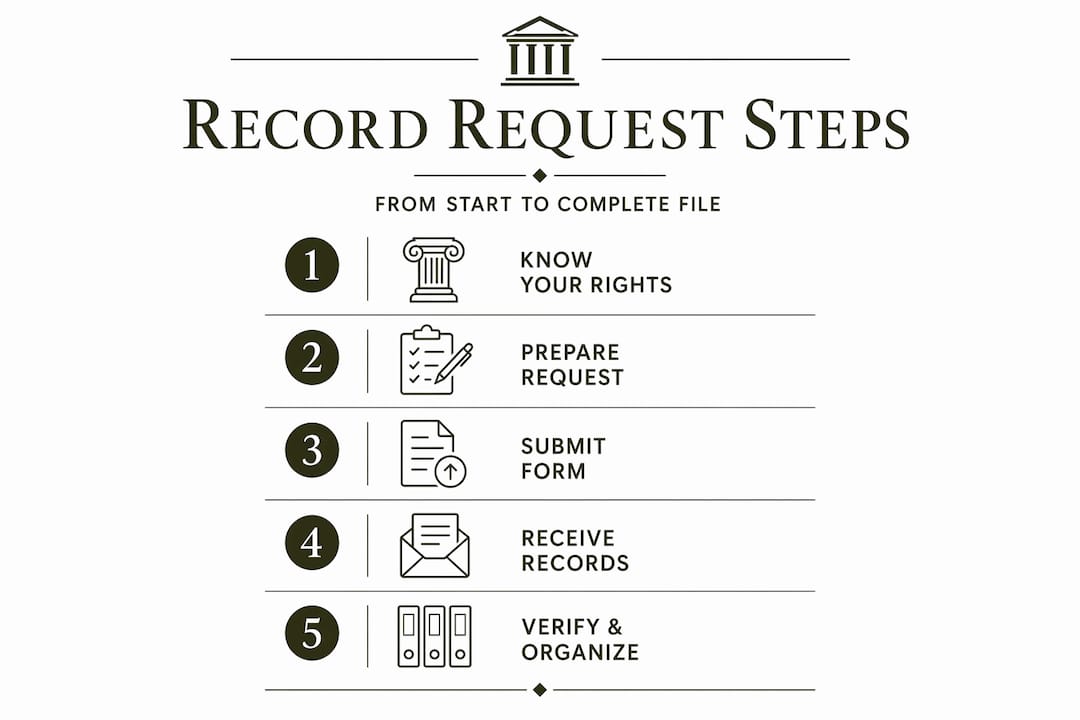
Before you write a single word of a records request, you need to understand what the law actually gives you. Two federal laws govern this process: the Individuals with Disabilities Education Act (IDEA) and the Family Educational Rights and Privacy Act (FERPA).
IDEA grants parents the right to examine all records related to their child’s identification, evaluation, educational placement, and the provision of a Free Appropriate Public Education (FAPE). This is not a courtesy. It is a procedural right, and denying it can constitute a procedural violation that impairs your meaningful participation in your child’s education.
FERPA adds the mechanics. Schools must respond to inspection and review requests within 45 calendar days from the date the written request is received. That 45-day clock does not start until the district has your request in hand, which is why proof of delivery matters enormously.
Types of records you can request
The special education documentation process covers a wide range of documents. Parents can typically request:
Individualized Education Programs (IEPs): All current and prior versions, including meeting notes and amendments
Evaluation reports: Psychoeducational assessments, speech and language evaluations, occupational therapy reports, and any independent educational evaluations
Progress reports: Quarterly or trimester reports on IEP goal progress
Behavior data: Functional behavior assessments (FBAs), behavior intervention plans (BIPs), and incident reports
Communication logs: Emails, meeting summaries, and written correspondence between school staff and parents
Eligibility determination records: Consent forms, eligibility meeting notes, and prior written notices
State and district rules add another layer. Massachusetts, for example, requires access within 10 days of an initial request, which is far shorter than FERPA’s 45-day federal standard. Always check your state’s specific regulations because they may work in your favor.
Preparing and submitting an effective records request
A vague request produces vague results. The most effective way to manage special education records starts with a precise, written request that names exactly what you need. Here is a step-by-step process that holds up legally and practically.
Put it in writing, always. Verbal requests are not protected. A written request, sent by certified mail or through a district’s secure parent portal, creates a paper trail and triggers your statutory rights. Submitting written requests with proof of receipt is the only way to safeguard the 45-day review right under FERPA and IDEA.
Include all required identifying information. State your child’s full legal name, date of birth, grade, school name, and student ID number if you have it. Address the request to the Special Education Director or the district’s designated records custodian.
Specify every record category by name. Do not ask for “all records.” Instead, list each category explicitly. An indexed scope request naming IEPs, evaluations, progress notes, behavior data, and communication logs prevents incomplete production and gives you a built-in checklist for verifying completeness once records arrive.
State your requested format and delivery method. Ask for copies in a format you can use, whether that is paper, PDF, or digital files. Specify whether you want them mailed, emailed, or available for pickup.
Include a response deadline. Reference the applicable legal standard (“within 45 calendar days under FERPA” or your state’s shorter deadline) so the district understands you know the rules.
Keep a copy of everything you send. Date-stamp your copy and note the tracking number if you used certified mail.
Request element | Why it matters |
Child’s identifying information | Prevents delays from records matching errors |
Named record categories | Stops incomplete or selective document production |
Written format with proof of receipt | Triggers legal review timeline and creates documentation |
Stated response deadline | Signals you know your rights and expect compliance |
Requested delivery method | Reduces back-and-forth and speeds up access |
Pro Tip: If you are building a due process case, organize your request to mirror the timeline of your child’s educational history. Request records by school year and include all prior IEPs, not just the most recent one. Hearing officers rely on the full picture, and gaps in documentation can weaken an otherwise strong case.
When things go wrong: obstacles and escalation
Even a perfectly written request can run into resistance. Knowing how to respond to delays, denials, and unexpected fees is part of how to request special education files effectively.
Unexpected fees: Districts may charge reasonable copying fees, but they cannot charge fees that effectively prevent access. If a district bundles your requests to inflate costs, push back in writing. Some districts have formalized policies that lump related requests together for fee assessments, which can affect parents requesting multiple record types at once. Ask the district to break down the fee schedule and cite your right to access under IDEA.
Incomplete records: If you receive a partial response, compare what arrived against your indexed request. Write a follow-up letter identifying the missing categories by name and request a response within a specific timeframe.
Outright denial: Denial of access to IDEA records can support due process relief when it impairs parental participation. A 2026 Pennsylvania court recognized this explicitly. If a district refuses access without a lawful reason, that refusal may itself be a procedural violation you can raise in a complaint.
No response at all: Document every attempt to follow up. Send a second written request referencing your original submission date and the applicable legal deadline. If the district still does not respond, escalate.
When escalation becomes necessary, your state’s special education office is a direct resource. State special education offices provide technical assistance, monitor IDEA compliance, and can receive formal complaints about district noncompliance. Filing a state complaint is often faster than due process and can produce results within 60 days.
One more warning: never rely on verbal assurances. If a school staff member tells you records are on the way or that a document does not exist, follow up in writing the same day. A written record of that exchange becomes part of your advocacy file. You can also review special education compliance steps to understand how district-level policies affect your rights in practice.
Watch for destruction notices. Some districts announce that old special education records will be destroyed after a certain date unless a parent requests them first. Treat any destruction deadline as a firm cutoff. Submit your request immediately with your child’s full identifying information and ask for delivery before the destruction date.
Verifying completeness and organizing what you receive
Receiving records is only half the work. Knowing how to verify and manage special education records is what turns a stack of documents into a real advocacy tool.

Start with a completeness check. Compare what arrived against the indexed list in your original request. Common gaps include older IEPs from previous school years, related service logs (speech therapy session notes, for example), and communication records from specific staff members. If anything is missing, follow up in writing immediately.
Document type | What to check for |
IEPs | All versions by year, including amendments and meeting notes |
Evaluations | Every assessment area, including any independent evaluations |
Progress reports | All reporting periods, not just the most recent |
Behavior records | FBAs, BIPs, incident reports, and restraint/seclusion logs |
Communication logs | Emails, prior written notices, and consent forms |
Once you confirm completeness, organize everything chronologically. Assembling IEPs, evaluations, and communication logs with a clear timeline greatly aids hearing officers and strengthens parental advocacy in due process proceedings. Create a simple index page listing each document by type and date so you can locate anything quickly.
Pro Tip: Create a separate folder for each school year and label each document with the date and document type. A simple spreadsheet tracking what you have, what you requested, and what is still missing will save you hours when you need to reference records quickly during an IEP meeting or hearing.
Ongoing management matters too. After each IEP meeting or evaluation, request updated records within 30 days. Do not wait until a dispute arises. Keeping your records current means you are always prepared, whether you need to support a program change, challenge a placement decision, or document a pattern of noncompliance. For guidance on using these records to support FAPE claims, the Vieraadvocacygroup resource on denial of FAPE advocacy offers practical next steps.
My perspective on records as a true advocacy tool
I’ve worked alongside families in special education advocacy long enough to know that most parents underestimate what their records can do for them. The common assumption is that records are just paperwork. In my experience, they are the foundation of every successful advocacy outcome I’ve seen.
What I’ve learned is that the families who come to the table with organized, complete documentation consistently get better results. Not because they are louder or more aggressive, but because they are specific. They can point to the exact IEP from three years ago that promised a service their child never received. They can show the pattern across progress reports that reveals a goal was never meaningfully addressed. That specificity changes the conversation.
I’ve also seen the flip side. Parents who relied on verbal agreements, who didn’t follow up in writing, who assumed the school would keep everything in order. When a dispute arose, they had almost nothing to work with. The procedural right to records access exists precisely to prevent that situation, but only if you use it.
My honest advice: do not wait for a crisis to start requesting and organizing your child’s records. Start now, request annually at minimum, and treat your records file as a living document. The parents who are most effective in IEP meetings and due process hearings are the ones who walked in already knowing what the file says.
— Chelsea
How Vieraadvocacygroup can support your advocacy

Knowing your rights is one thing. Putting them into practice under pressure is another. Vieraadvocacygroup works directly with families to build the documentation skills, legal knowledge, and confidence needed to advocate effectively in any special education setting. From handling IEP records requests to preparing for due process hearings, the team at Vieraadvocacygroup provides hands-on support tailored to your child’s specific situation.
For parents who want structured, practical training, the Parent Advocacy Boot Camp is a high-value program that covers records requests, IEP meetings, complaint filing, and more. It is designed for parents who are ready to move from confusion to confidence. You do not have to figure this out alone.
FAQ
What records can parents request under IDEA?
Under IDEA, parents can request all records related to their child’s identification, evaluation, educational placement, and the provision of FAPE. This includes IEPs, evaluation reports, progress notes, behavior data, and communication logs.
How long does a school have to respond to a records request?
Under FERPA, schools must respond to a written inspection request within 45 calendar days. Some states set shorter deadlines. Massachusetts, for example, requires access within 10 days of an initial request.
What should I do if a district denies access to records?
Document the denial in writing and reference your rights under IDEA and FERPA. A denial that impairs your participation in educational decisions may constitute a procedural violation, which you can raise through a state complaint or due process hearing.
How do I prevent receiving incomplete records?
Submit a written request that names each record category explicitly, including IEPs, evaluations, behavior plans, and communication logs. An indexed scope request prevents selective or partial production and gives you a checklist to verify completeness upon receipt.
What happens if a district plans to destroy my child’s records?
Treat any destruction deadline as a firm cutoff and submit your request immediately with your child’s full identifying information. Request delivery or inspection before the destruction date to preserve access to those records permanently.
Recommended


Comments